Completion requirements
View
4. Co-creation
4.1. Co-design & Co-creation
There are a multitude of types and levels (take a look at the next section to learn more about this) in which co-creation can take place within the tourism ecosystem of a community/region.
However, in general, when thinking about co-creation in a business context one tends to think of processes in which corporations include their (potential) customers in the process of co-ideation and co-design of products/services or innovations that can effectively and satisfactorily respond to the expectations and needs of the target group. In that sense, co-creation can be a particular example to the collaboration with customers previously mentioned.
Precisely linked to this idea is the conception that co-creation is closely linked to co-design (note that they are often intertwined processes, but can also occur separately), and, in turn, this collaboration goes through the phases of what is known as Design Thinking of design or innovation.
● Co-creation: partnership between companies, organisations, and/or users/customers that involves sharing discussions and experiences in order to establish collaborative initiatives and co-create goods and/or experiences that are appropriate for the context.
● Co-design: Co-design, also known as "participatory design," is the process of creating a product or service in collaboration with stakeholders (e.g. employees, partners, customers, citizens, end users). It describes the procedure by which a user or group of users, along with other important stakeholders, actively participates in the design of a specific good or service, offering suggestions and direct responses to guarantee the final products are useful and environmentally friendly while also meeting the needs of end users.
The co-design process is most closely related to the Design Thinking ideation process, or the process of coming up with new goods and/or service concepts. For its part, the co-creation process is more closely related to the convergent thinking of Design Thinking. This means, with the implementation of innovation, testing, etc.
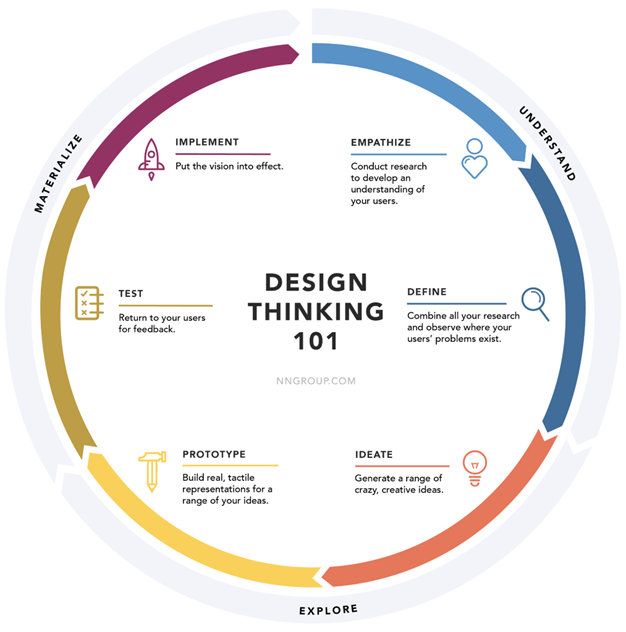
Source: Design Thinking: Study Guide
You can learn more about the Design Thinking methodology through the following post: Design Thinking - A Creative Strategy For Innovation